T24 Hers Rating(ECC)
01
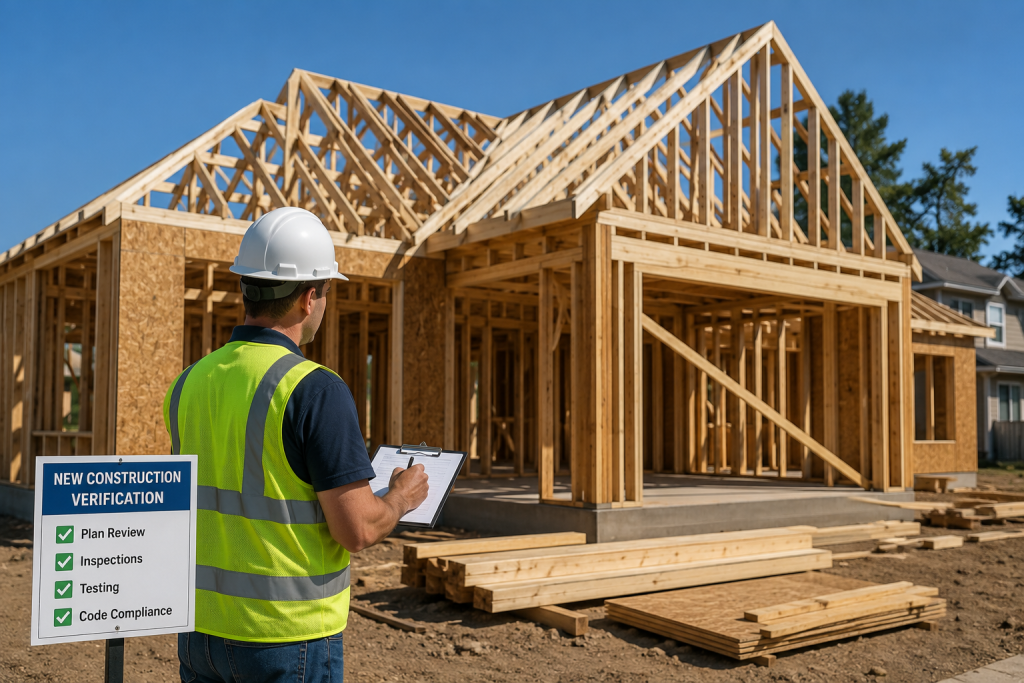
New Construction Verification
We coordinate required inspections and testing for newly constructed homes, townhomes, condominiums, and other qualifying residential projects.
Our verification process may include reviewing project documentation, inspecting installed energy-related components, performing required field measurements, and documenting applicable test results.
By identifying potential compliance issues before project completion, we help builders, contractors, and project owners move toward final approval with greater confidence.
02
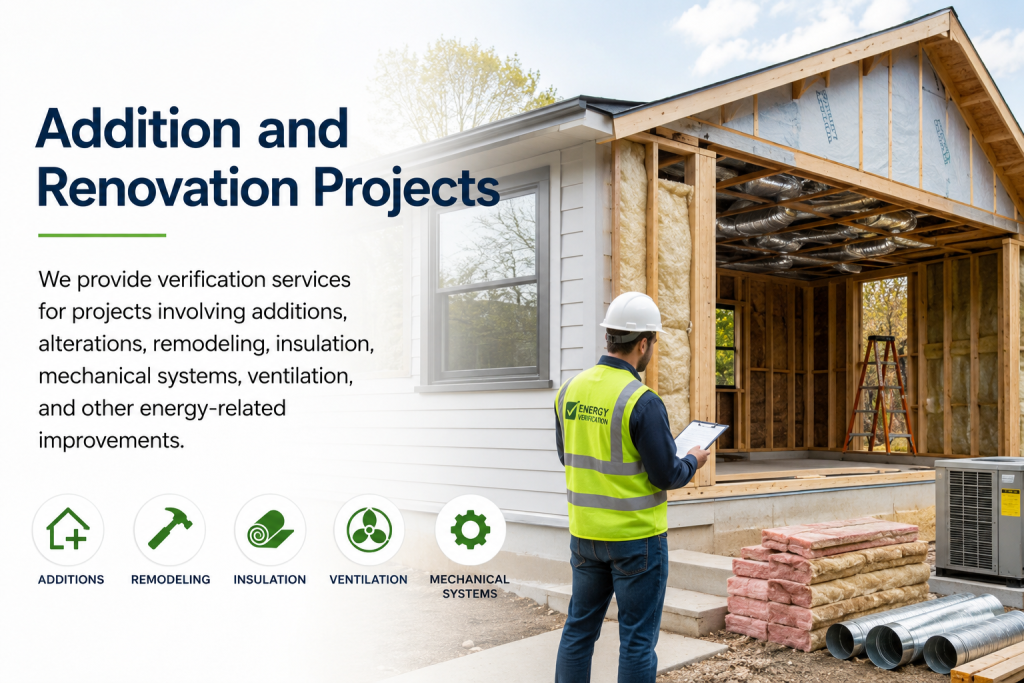
Addition and Renovation Projects
We provide verification services for projects involving additions, alterations, remodeling, insulation, mechanical systems, ventilation, and other energy-related improvements.
Renovation projects often involve a combination of existing building conditions and newly installed equipment. Our technicians evaluate the applicable portions of the project and perform the inspections or testing identified in the approved compliance documents.
These services help confirm that new energy-efficiency measures have been installed correctly and are ready for applicable building-department review.
03
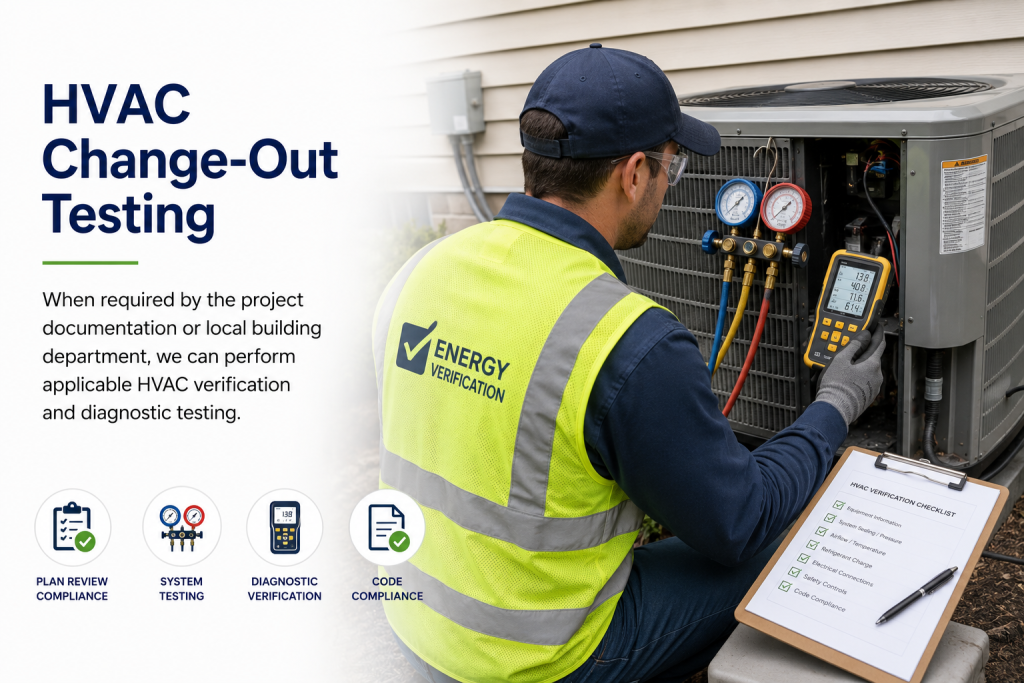
HVAC Change-Out Testing
When required by the project documentation or local building department, we perform applicable HVAC verification and diagnostic testing for replacement air-conditioning, heating, and heat-pump systems.
Testing may evaluate system operation, airflow, electrical performance, refrigerant conditions, duct-system performance, or other project-specific requirements.
Our goal is to provide accurate field results and clear documentation that supports the project’s compliance process.
04
Duct Leakage Testing
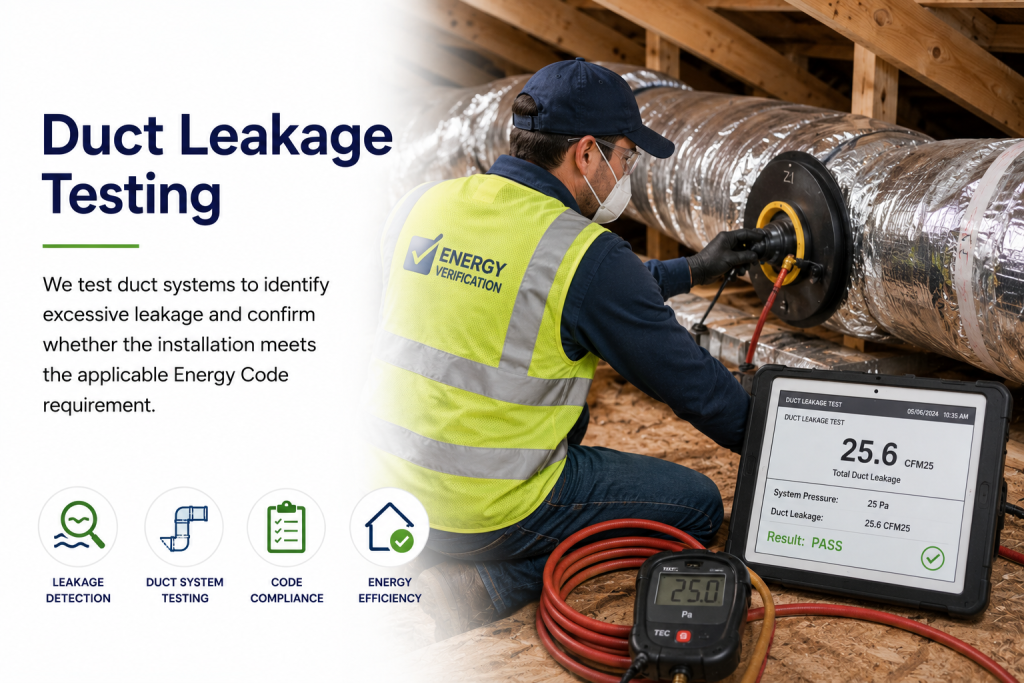
We test duct systems to identify excessive air leakage and help determine whether the installation meets the applicable Energy Code requirement.
During testing, the duct system is placed under controlled pressure and specialized diagnostic equipment is used to measure the amount of air escaping from the system.
Reducing duct leakage can support improved comfort, better system performance, and more efficient delivery of conditioned air throughout the building.
05
Airflow and Fan-Efficacy Testing
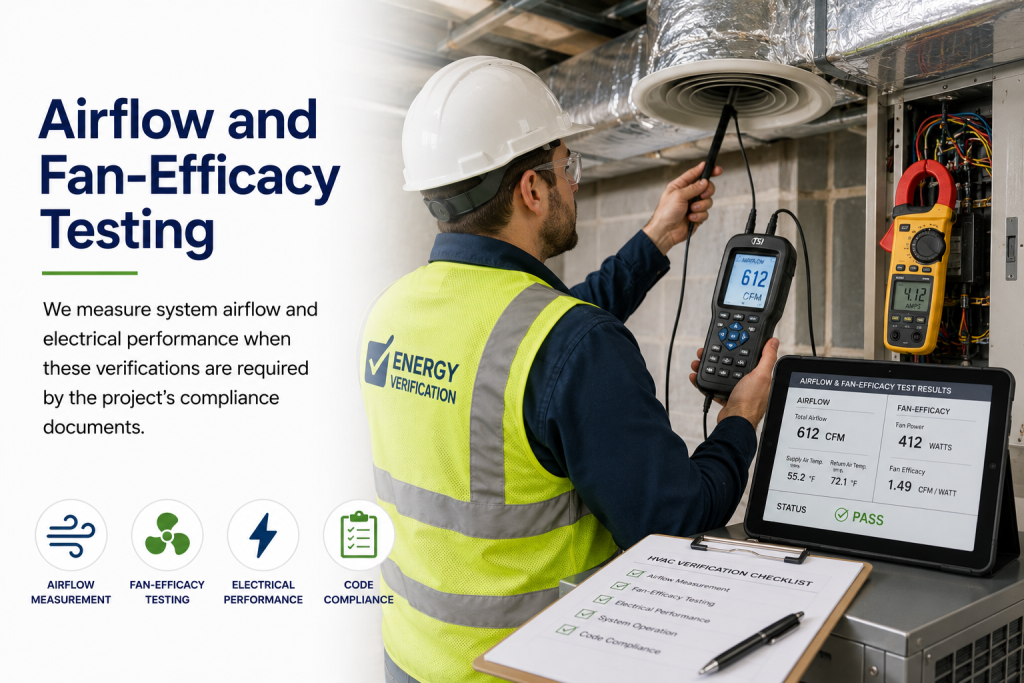
We measure system airflow and electrical performance when these verifications are required by the project’s compliance documents.
Airflow testing helps determine whether the HVAC system is delivering an appropriate volume of air. Fan-efficacy testing evaluates the electrical power used by the system fan in relation to the airflow being produced.
Together, these measurements provide useful information about system setup, performance, and applicable energy-efficiency requirements.
06
Refrigerant Charge Verification
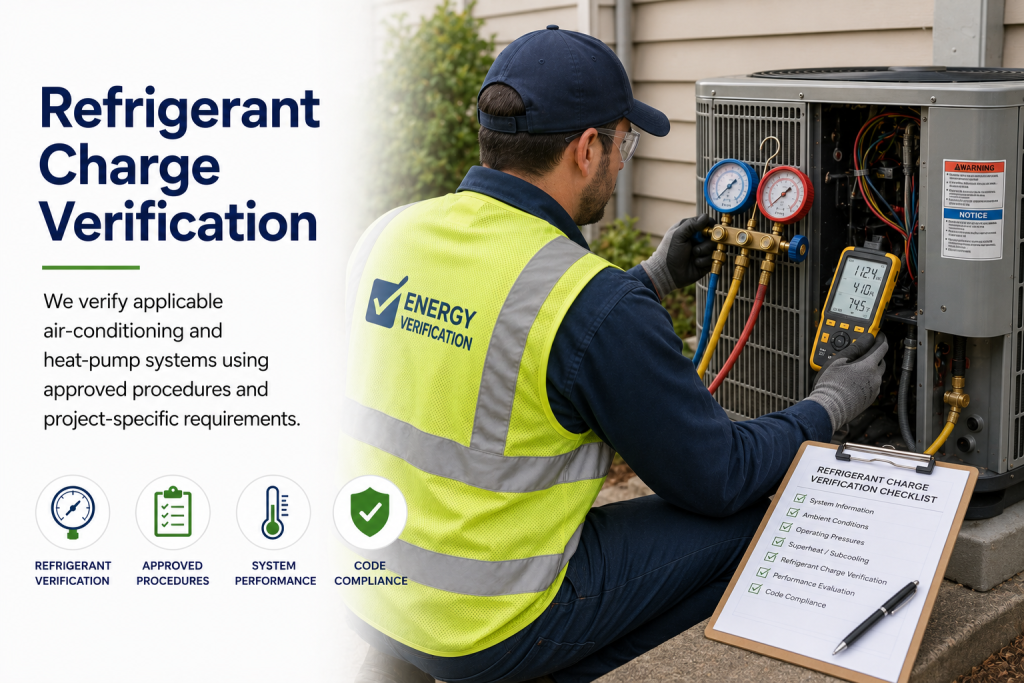
We verify applicable air-conditioning and heat-pump systems using approved procedures and project-specific requirements.
The correct refrigerant charge is important to system capacity, operating efficiency, equipment performance, and long-term reliability. Our technicians collect required operating measurements and evaluate the system using the applicable verification method.
Testing is completed under appropriate operating conditions and documented according to the project’s compliance requirements.
07
Indoor Air-Quality and Ventilation Verification
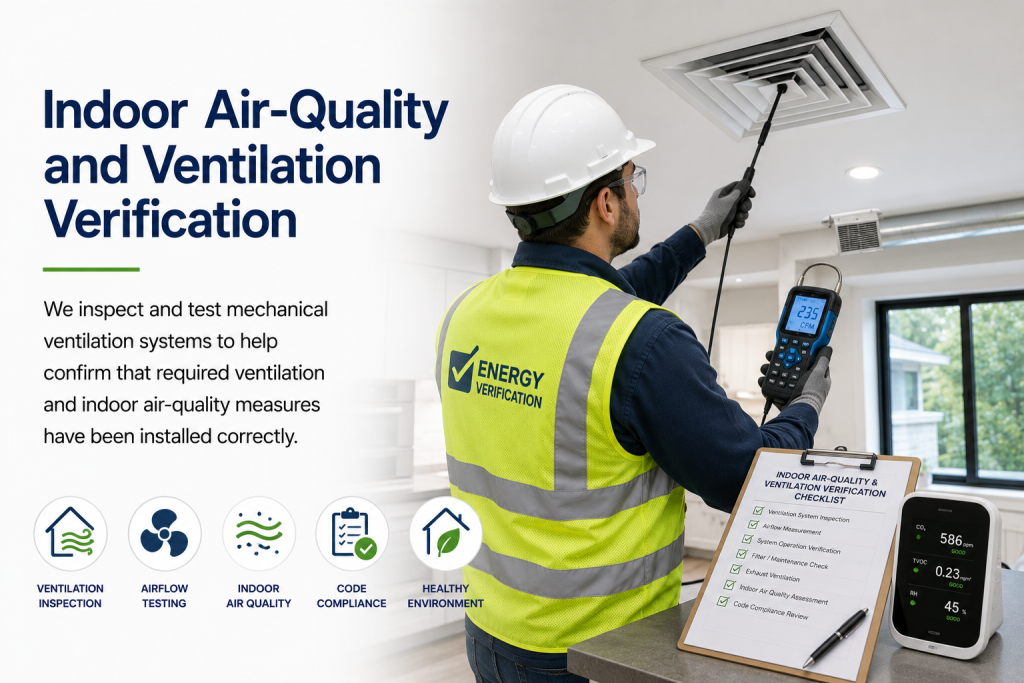
We inspect and test mechanical ventilation systems to help confirm that required ventilation and indoor air-quality measures have been installed correctly.
Verification may include checking ventilation equipment, controls, airflow rates, exhaust systems, outdoor-air delivery, and other components identified in the approved project documents.
Proper ventilation helps introduce fresh outdoor air, remove indoor contaminants, manage moisture, and support a healthier and more comfortable indoor environment.