
An HVAC system can only deliver the airflow its ductwork and grilles allow. Even a correctly sized air conditioner or heat pump may perform poorly when the return duct is too small, the grille has limited free area, or flexible duct is compressed and sharply bent. These restrictions increase static pressure, reduce airflow, create noise, and can shorten equipment life.
Airflow Starts with Duct Size
Residential HVAC airflow is commonly discussed in cubic feet per minute (CFM). As a general starting point, many cooling systems are designed near 400 CFM per ton, although the correct target depends on equipment specifications, climate, humidity-control goals, and system design. A nominal 3-ton system, for example, may require approximately 1,200 CFM.
Duct diameter has a major effect on how easily that air can move. A small increase in diameter produces a much larger increase in cross-sectional area. If a duct is undersized, air velocity and friction rise. The blower must then work against greater resistance, and the system may not achieve its required airflow.
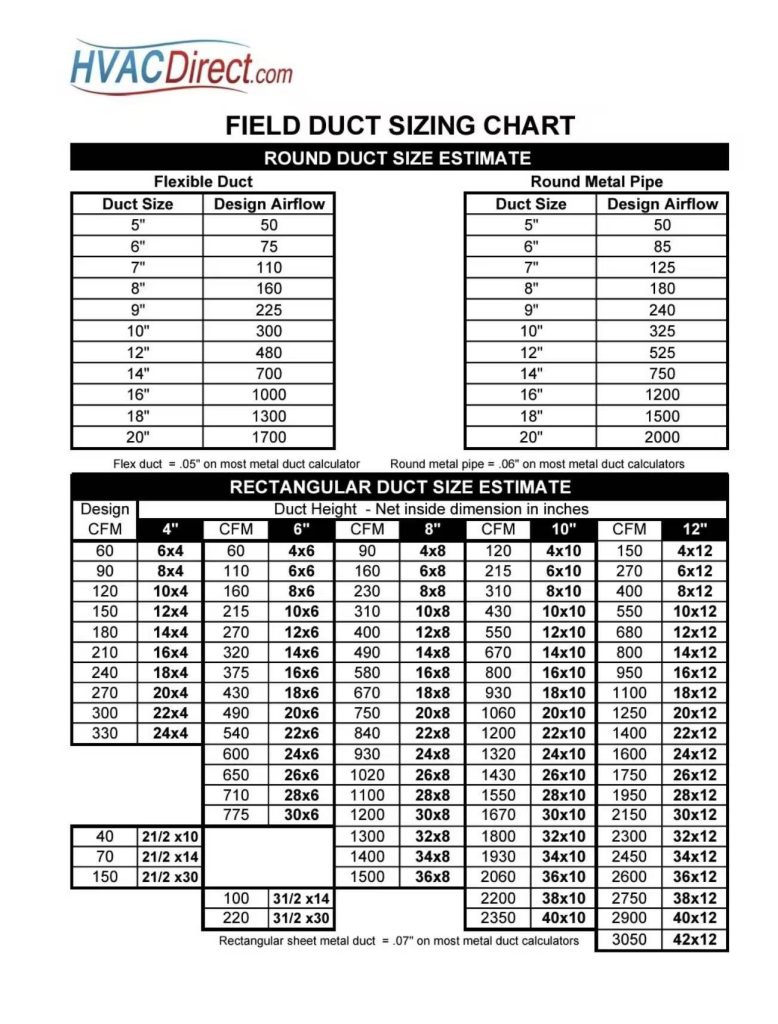
Figure 1. Field duct-sizing estimates for flexible duct, round metal pipe, and rectangular duct.
Figure 1 illustrates this relationship. The chart estimates about 300 CFM through a 10-inch flexible duct and about 1,000 CFM through a 16-inch flexible duct under the stated design assumptions. It also shows that smooth round metal pipe can carry somewhat more air than flexible duct of the same nominal diameter because its interior surface produces less friction.
The chart should be treated as a field estimate, not a final design method. Actual capacity depends on duct length, fitting losses, available static pressure, insulation, installation quality, and the blower’s performance curve. Flexible duct must be pulled tight and supported correctly; compression, sagging, and sharp turns can significantly increase resistance.
The Return Side Is Often the Bottleneck
The return system brings room air back to the air handler. If the return duct or return grille is too restrictive, the blower cannot receive enough air. This can lower supply airflow throughout the house, even when the supply ducts are adequately sized.
Common symptoms of a restrictive return include:
- Loud whistling or rushing noise at the grille
- A filter that bends or is pulled tightly against its rack
- Weak airflow at multiple supply registers
- High measured return static pressure
- Longer run times and uneven room temperatures
- Coil icing or low evaporator temperature during cooling
- Excessive furnace temperature rise during heating
A larger return opening reduces face velocity and pressure drop. In many homes, adding a second return or enlarging both the return duct and grille is more effective than simply installing a larger grille over an undersized duct opening.
Grille Dimensions Are Not the Same as Free Area
A return grille’s listed dimensions describe its face size, but not all of that face is open to airflow. The usable opening is called free area. Blades, louvers, frames, and filter supports reduce it.
The basic relationship is:
Airflow (CFM) = Free Area (sq. ft.) × Face Velocity (FPM)
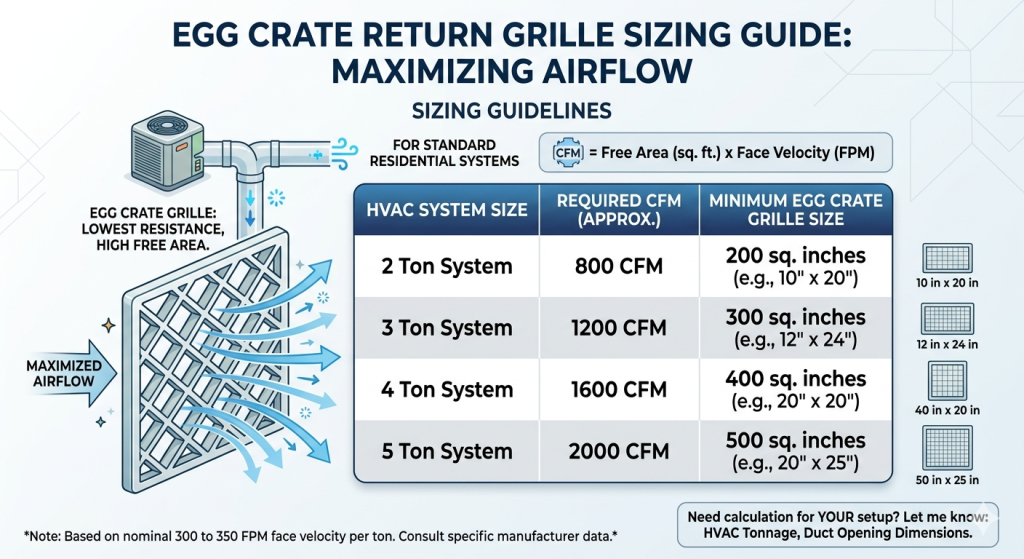
Figure 2. An approximate egg-crate return-grille sizing guide based on system airflow.
Figure 2 presents a simple starting point: approximately 200 square inches of egg-crate grille face area for a 2-ton system, increasing to about 500 square inches for a 5-ton system. These examples assume roughly 400 CFM per ton and a relatively open grille.
For example, a nominal 20-by-20-inch grille has 400 square inches of face area, or 2.78 square feet. If its free-area ratio is 90%, its effective free area is approximately 2.5 square feet. At 400 feet per minute face velocity, the theoretical airflow is approximately 1,000 CFM:
2.5 sq. ft. × 400 FPM ≈ 1,000 CFM
In practice, the grille should be selected using the manufacturer’s free-area and pressure-drop data. The filter, return box, duct transition, and duct itself must also be sized for the same airflow.
Egg-Crate Versus Louvered Return Grilles
Egg-crate grilles generally have a high percentage of open area and a relatively straight airflow path. Conventional louvered grilles use angled blades that provide a more finished appearance and block the view into the return cavity, but those blades can reduce free area and increase resistance.
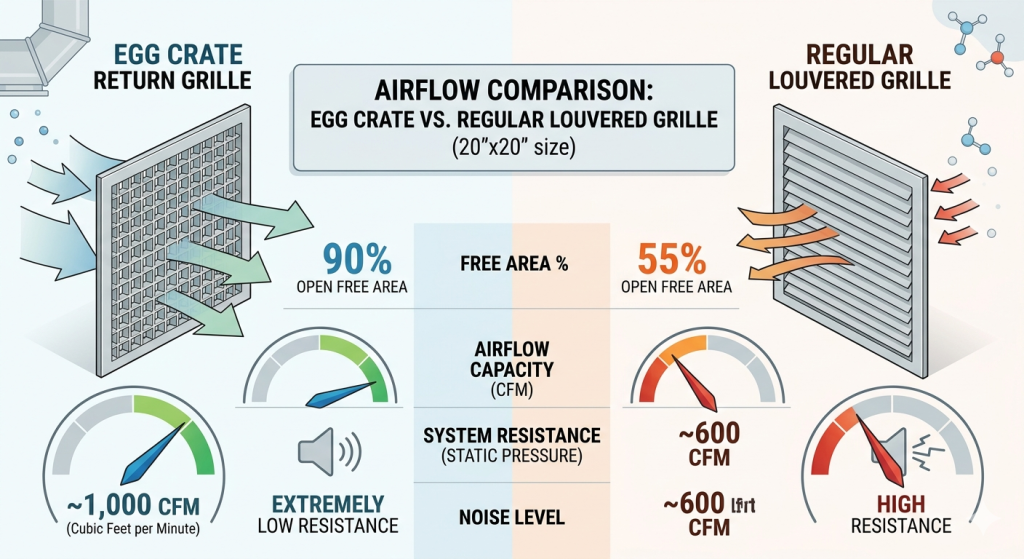
Figure 3. Conceptual airflow comparison between egg-crate and louvered return grilles of the same face size.
Figure 3 illustrates the key principle: two grilles with identical outside dimensions may not deliver the same airflow. A high-free-area egg-crate grille may produce less pressure drop and noise than a louvered grille at the same CFM. However, the exact 90%, 55%, 1,000-CFM, and 600-CFM figures shown are illustrative rather than universal. Performance varies by blade design, depth, construction, and manufacturer.
This is why grille selection should not be based on face dimensions alone. The best comparison uses:
- Manufacturer-rated free area
- Pressure drop at the required CFM
- Face velocity
- Noise criteria
- Filter pressure drop, when the grille holds a filter
The Entire Air Path Must Be Sized as a System
Air follows a complete path: room → return grille → filter → return box → return duct → blower → supply duct → register → room. The most restrictive component can limit the entire system.
Installing a high-free-area grille will not solve a return duct that is too small. Likewise, a large return duct can still be restricted by a small filter rack, a poorly designed transition, or a heavily loaded filter. Good airflow requires every component in the path to be compatible with the design CFM.
A proper evaluation should include:
- Room-by-room load calculations
- Equipment airflow requirements
- Duct sizing based on total effective length and available static pressure
- Manufacturer blower-performance data
- Grille and filter pressure-drop data
- Total external static-pressure measurement
- Delivered-airflow testing after installation
Conclusion
Duct size determines how much air the system can move without excessive friction, while return-grille design determines how easily room air can enter the return system. Undersized ducts and low-free-area grilles raise static pressure, reduce airflow, increase noise, and can cause comfort or equipment problems.
For best performance, size the duct, return grille, filter, return box, and transitions together. Field charts are useful for preliminary estimates, but final selections should be verified with equipment data, pressure-drop information, and onsite airflow and static-pressure measurements.
*Technical note: The figures above are educational references. Their airflow values should not replace ACCA Manual D calculations, manufacturer data, or field testing by a qualified HVAC professional.